

A timeline history of English Cider with prints, photographs and films
|
|---|
Prehistoric Period
3,000 BCE, The Celts are thought to have drunk a form of cider, sourced from crab apples.
Roman Period
It is said that the first Romans arriving in Britain in 55 B.C found the locals drinking a cider-like drink and swiftly gained a liking for it, bringing it back across the empire. Following the discovery, cider soon spread across wider parts of Europe – historians have uncovered evidence of Germanic tribes enjoying the drink, as well as a number of monasteries across Europe, who would produce the drink not just for their personal pleasure but also to sell to the public.
Medieval Period
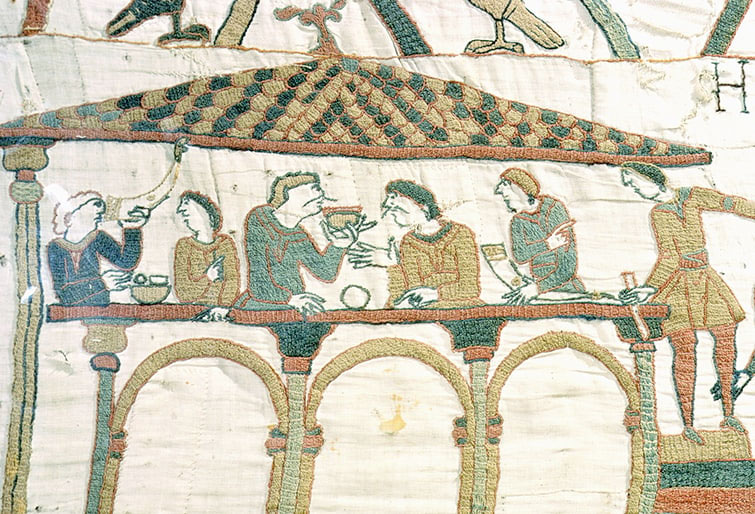
1200 Reference to a house in Staffordshire called Pressurhus with outbuildings including a cider press (molendina ad poma).

1204 First written record of cider being used as a form of payment from a manor house in Runham, Norfolk.
C13 Daniel of Beccles in his The Book of Civilized Man declaring cider to be the ‘Englishman’s drink’. If you had a choleric temperament, cider was thought to be good for you as it was cold and moist, and thus counteracted the warm and dry characteristics of a choleric drinker.
1275 Reference to a sale of cider Battle Abbey, Sussex.
1313 The garden at Meare Abbey Somerset produced apples for cider.
1349 Reference to an an instruction to Roger Daber, Reeve of Surrey and Sussex, to take to Shoreham, 52 barrels and 1 pip of cider, which is to be collected from the surrounding area. From Shoreham it must be hauled to the docks, loaded on boats and taken to Calais. The cost of the cider was £34 6s 8d, with each barrel costing 13s 4d[3]. The cost of bringing it to Shoreham was 47s 2d, of keeping it in store in Shoreham from 1 Feb 1349 to 1 April 1st (59 days) 34s 7d, taking it by boat to Calais 115s 11d plus two recorders at port for 15 days at 6d per day. The whole cost was £44 19s 4
1358 Reference to a sale of cider at Sampford Peverell , Devon.
1383 Reference to cider (sicer), collecting apples in a Devon garden, carrying to presser, hiring a presser to make two casks of cider, milling apples and carrying home two casks of cider.
1451 Reference to cider at Kingskerswell Manor, Devon.
Tudor Period
Cider in Tudor England was a well-established, common beverage that served as a staple drink for the working class, particularly in regions with established orchards like Herefordshire, Worcestershire, and Somerset. While ale remained the primary daily drink, cider grew in importance during this period due to its longevity, portability, and the expansion of orchard cultivation.
Stuart Period
1618 The first written instructions for making cider were written by Elizabethan clergyman, William Lawson of Coxwoldm (1598-?) In his book, ‘A New Orchard and Kitchen Garden’, he writes “In France and some other Countries, and in England, they make great vse of Cydar and Perry, thus made: Dresse euery Apple, the stalke, vpper end, and all galles away, stampe them, and straine them, and within 24. houres tun them vp into cleane, sweet, and sound vessels, for feare of euill ayre, which they will readily take: and if you hang a poakefull of Cloues, Mace, Nutmegs, Cinamon, Ginger, and pils of Lemmons in the midst of the vessell, it will make it as wholesome and pleasant as wine. The like vsage doth Perry require. These drinks are very wholesome, they coole, purge, and preuent hot Agues. But I leaue this skill to Physicians”
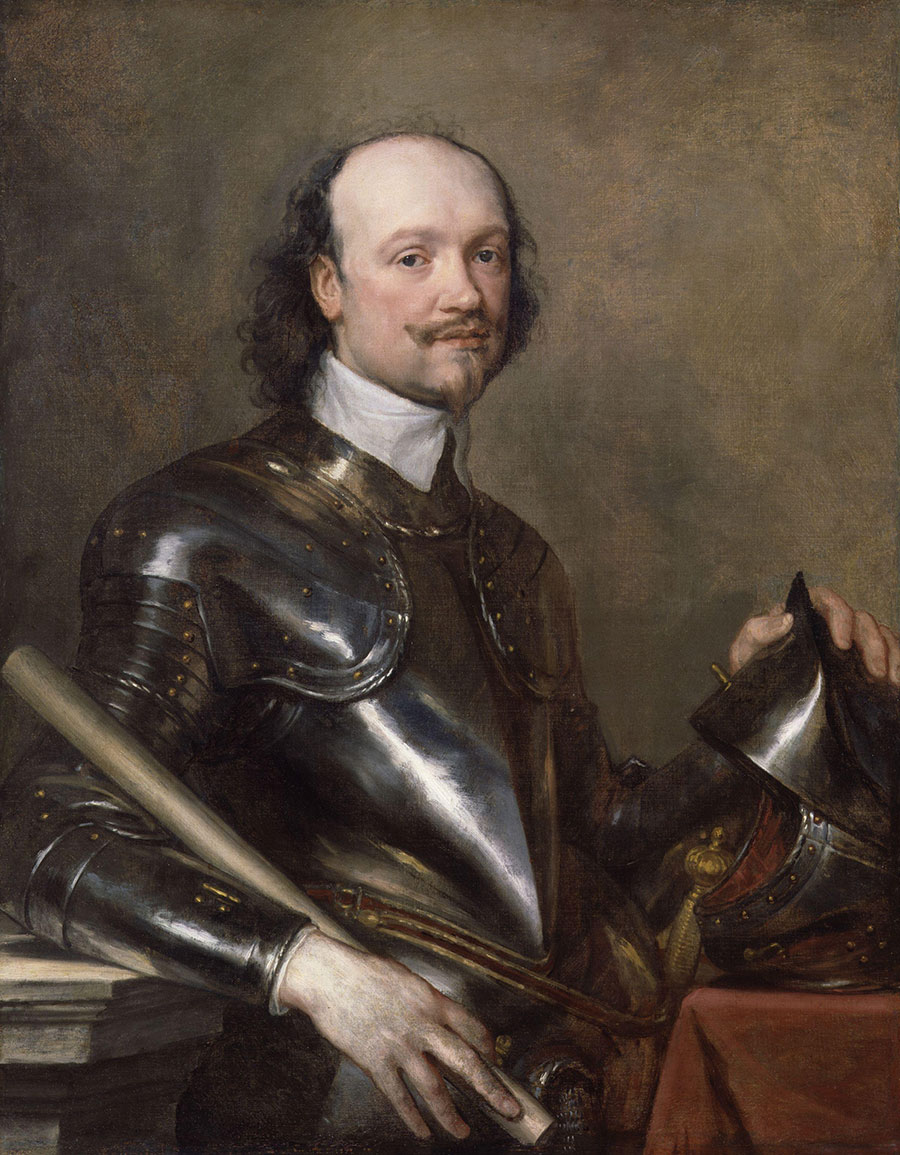
1633 Sir Kenelm Digby (1603-1665) was the inventor of a special super strength glass bottle. Used to bottle fine cider and later sparkling wine (more info).
1640s John Scudamore (1601-1671), first Viscount Scudamore developed agriculture at Holme Lacy, Herefordshire, including apples. Scudamore was ambassador to the court of Louis XIII during the reign of Charles II and returned from France with a collection of cider fruit from Normandy. These he used to improve English stocks, through cross-pollination and the development of seedlings. Cider rapidly becomes the national drink. It is reputed that more cider-houses than ale-houses were licensed in London during the reign of Charles II He is credited with developing the red streak apple, acknowledged as an excellent cider apple, which spread through the county and country. He wrote: Duncumbe said "The colour of a good cyder fruit are red and yellow, the colour to be avoided is green, as affording liquor of the harshest and generally poorest quality; the pulp should be yellow, and the taste astringent. Apples of a small size are always preferred to those of a larger in order that the rind and kernel, in which principally consist the strength and flavour of the liquor, may bear the greatest proportion to the pulp, which affords the weakest and most watery juice."
1648 Sir Paul Neile (1613-1686) MP, son of the Archbishop of York and MP for Ripon, wrote the first paper to be presented to the Royal Society. It was on making cider. His ‘Potgun cider’ is the first written record of what has become the ‘Méthode Champenoise’, some fifty years before it was described by Dom Perignon.
1664 John Evelyn (1620-1708) wrote Pomona the first monograph on the manufacture of cider in England. It encouraged the landed gentry to grow fine cider instead of wine. He mentioned several varieties of apple including Red Strake, especially the Irchin field (Archenfield) Red Strake, Genet Moyle, Bromsbury Crab, White Must, Bexyd Hery a musky pear, and the French Kernel, a tree of small of growth and empty, meer skins of kernels “not unlike to the emasculated scrotum of an eunuch”. He thought Horse Pear and Bear Land Pear to be the best.
1676
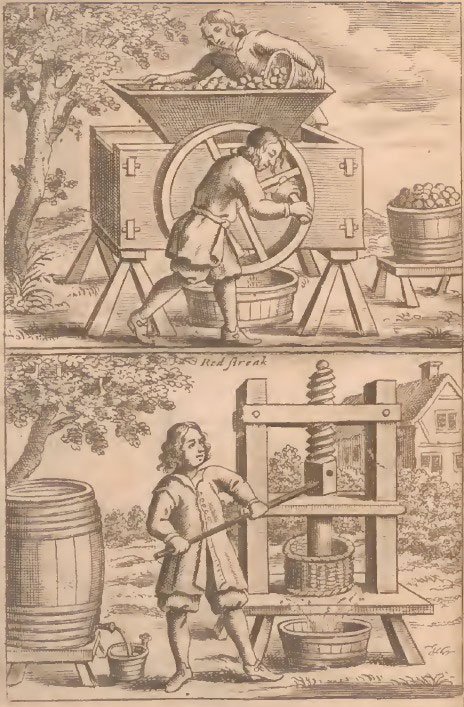
John Wolridge (1640–1700) wrote Vinetum britannicum, or a Treatise of Cider. He advocated the production of cider over wine as it was better suited to England’s climate. It featured recent cider press and grinder machines
Georgian Period
1727 Symonds' Cider and English Wine Company of Stoke Lacy in Herefordshire.
1729 Clement Benjamin Chevallier (1697-1762) of Aspel hall in Suffolk imported a Normandy cyder press.He planted the first large-scale cyder orchards in Suffolk. He nurtured his trees, then pressed and blended his apples, pioneering a new standard for British fine cyder. Cyder being made from a single pressing of vintage fruit, rather like “extra virgin” olive oil.
IMAGE https://family-tree.cobboldfht.com/people/view/1330
1763 Cider tax introduced, it was designed to raise funds for the Seven Years War.
Led to a decline in cider-making.
1766 Cider tax repealed.
1792-1815 During the Napoleonic Wars (1792-1815), when there was increased pressure on farmers to put their land to grain and livestock, the cider orchards of the county became neglected.
1797 The horticulturalist Thomas Andrew Knight (1759 -1838) of Downton published a Treatise on Cider .
1809 The Bramley apple originated in Nottinghamshire. As a cooking apple it was used with other apples for cider making in Eastern Counties Style.
1816 Sheppy’s Cider founded in Somerset.
Early Victorian Period
c. 1839 Richard Cox (c. 1766-1845) bred Cox’s Orange Pippin & Cox's Pomona.
1872 First record of Egremont Russet cooking apple by Earl of Egremont in Petworth, Sussex.
Late Victorian Period
1880-1900 Twelve cider factories opened around Hereford City.
1880 Weston’s Cider established in Much Marcle, Herefordshire by Henry Weston. More info
1883 Herefordshire had 27,000 acres of orchard (more than Devon, Kent or Somerset)
1887 Bulmers Cider established in Hereford by Henry "Percy" Bulmer (1867-1919). He used apples from the orchard at his father's rectory and an old stone press on the farm next door to make his first cider. Joined by his brother Fred Bulmer. 1887, Percy produced 4,000 gallons of cider using traditional methods. The brothers became ‘whole time workers’, working round the clock. There were no cider making machines to speed the process up, so they invented them. With the help of an engineering friend the brothers innovated, they also imported a mill and press from France where production was more advanced More info
The Truck Act prohibited the practice of paying wages in cider.
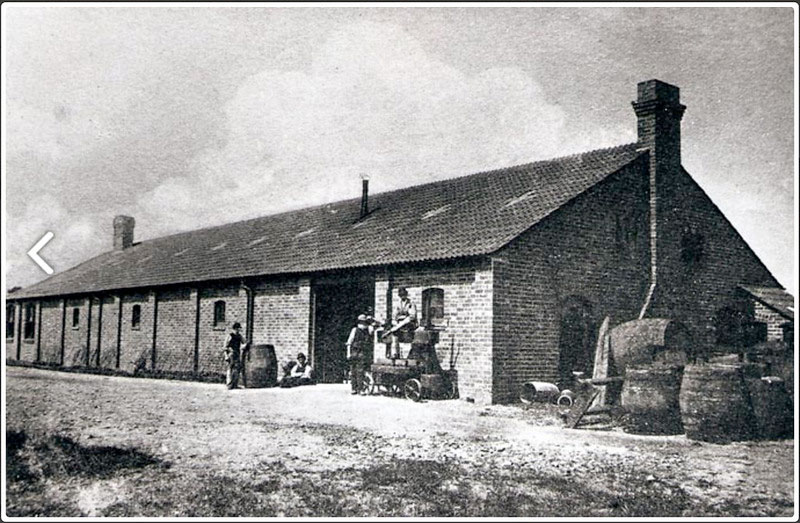
1888 Photo of original Bulmers’ cider factory, on Ryelands Street, Hereford
1889 Dr Herbert Durham, a friend of Fred Bulmer, isolated a wild yeast to create the first pure cider yeast culture, which would ensure that fermentations were consistent. This was the start of commercial cider-making
1893 Research on cider making began privately by Robert Neville-Grenville in in his cider house on his farm at Butleigh, Somerset.
1896 Bulmers Cider output reached not far short of 200,000 gallons a year.
1898 The Yarlington Mill apple was said to have first been discovered as a 'wilding' in by a Mr. Bartlett, who found it growing out of a wall in Yarlington, Somerset. It became the mainstay of many Western Counties Cider makers.
Godwin's Jubilee Cider Works established at Holmer by Henry Godwin (1828-1910).
A Book about Cider and Perry - CW Ratcliffe Cooke (Horace Cox) Google books
Edwardian Period
1903 Formation of the National Fruit and Cider Institute near Long Ashton in Somerset (later known as Long Ashton Research Station). Founded by C.W. Radcliffe-Cooke, in association with the Board of Agriculture, the Bath and West Society and the county councils of Devon, Gloucester, Somerset, Worcester, Monmouth and Hereford. The Institute investigated the cultivation of fruit and vegetables, with special reference to cider and perry, in order to improve existing varieties and create new ones. It also researched and demonstrated pest and disease control, pruning, fermentation, preservation, pasteurisation, bottling and identification of vintage cider varieties The intervention was to improve the making of Western Counties Cider.
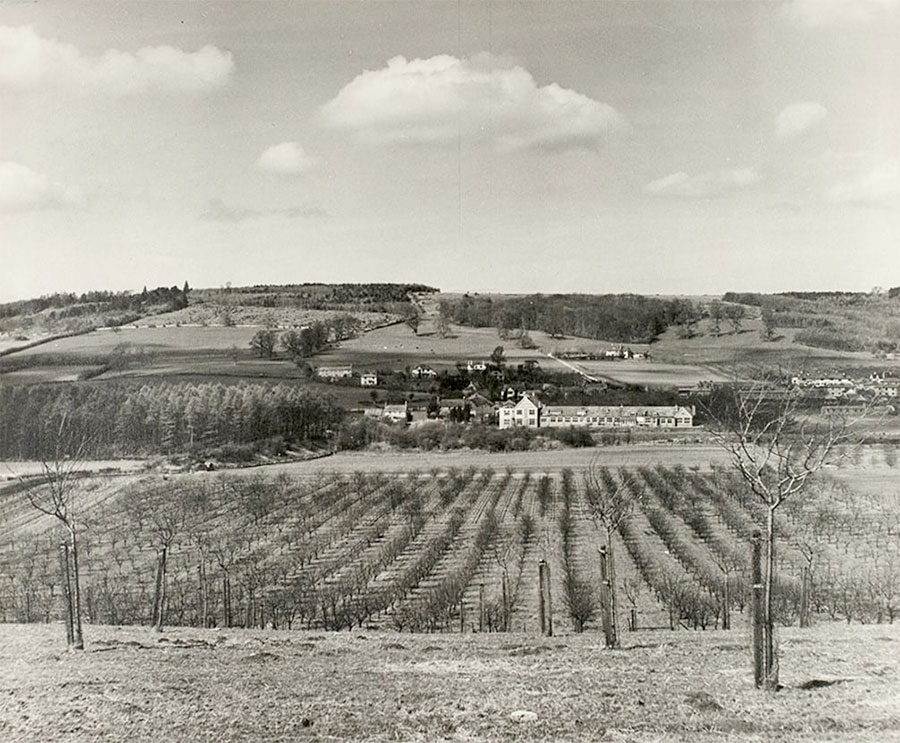
1904 Thatchers Cider established at Myrtle Farm in Sandford, Somerset. More info
1911 Taunton Cider founded in Somerset (closed in 2023).
Interwar Period
1919 Bulmer had 2 acres of cellaring below ground and sold 80,000 gallons p.a.
1920 National Association of Cider Makers formed.
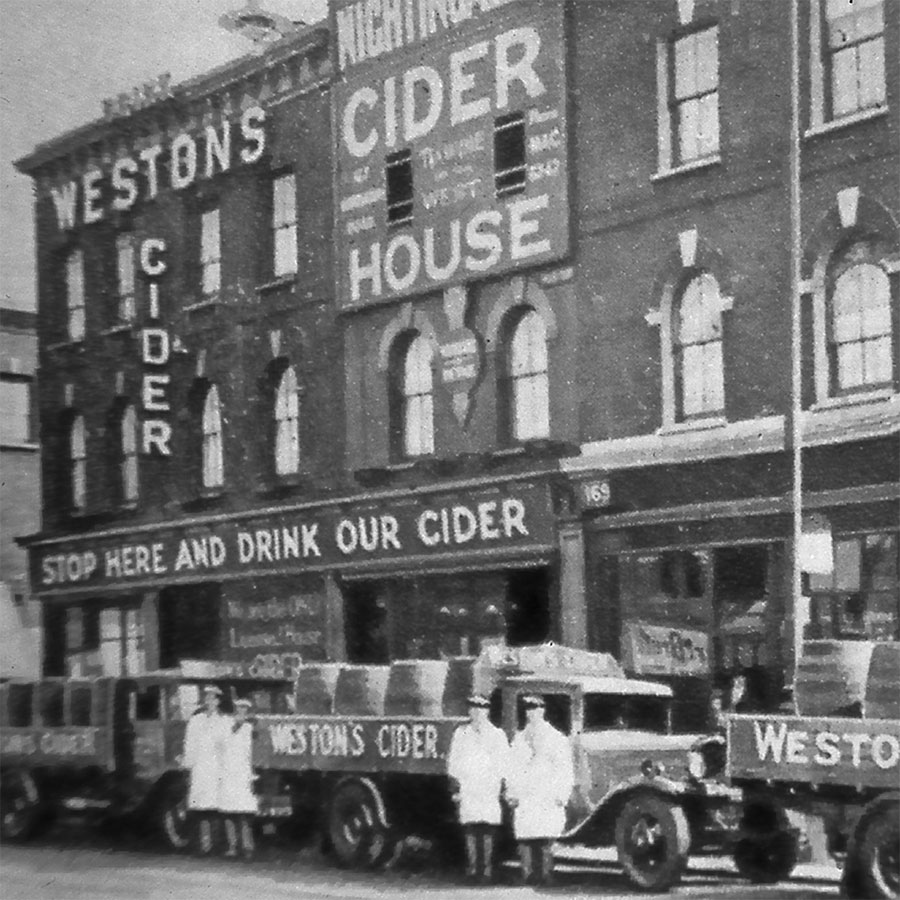
1930 Photo of Weston’s Cider House at 339 Harrow Road, W9 (closed in 1970). The cider was brought up to Paddington on the Great Western line and then taken to the Cider House in heavily advertised lorries. It closed in 1970.
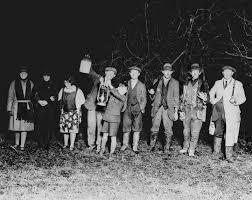
Wassailing in the orchards in Somerset, UK
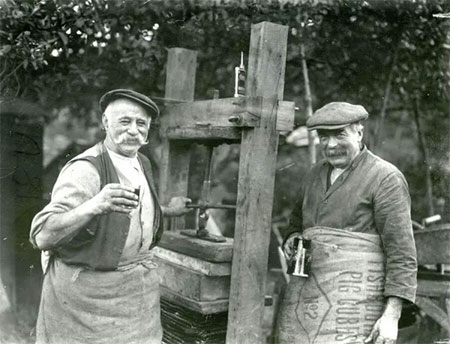
1933 Cider making at Hillgrove, West Sussex.
1938 Fred Bulmer retired. Bulmers Cider output reached almost 4 million gallons a year, making it the UK market leader.
Postwar Period
1940s Archive film of cider making in Herefordshire (4:08)

1946 Jack Ward, John Kelland-Knight and Ian Howie started Merrydown Cider in Horam, East Sussex. Jack Ward was the wine maker. They each put in £100 to turn Jack’s wine making hobby into a business and produced their first batch of Merrydown Apple Wine by fermenting 450 gallons of apple juice using a 300 year-old oak cider press borrowed from a farmer. Nine years later, production had risen to 400,000 gallons.
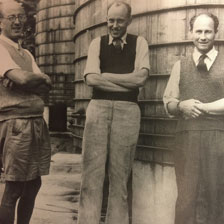
1948 Bulmer's acquired Godwin's cider.
1949 Discovery apple produced by George Dummer. A cooking & eating apple so ideal for cider making in Eastern Counties Style.
1950 Long Ashton Research Station referred to Kingston Black apple as "more widely grown than any other cider apple" in the West of England.
1952 The National Fruit Collection moved to Brogdale Farm in Kent from Wisley in Surrey.
1971 Burrow Hill Cider established by Julian Timperley (b. 1945) at Martock in North Somerset.
1977 Crossmans established by Ben Crossman (b. 1955) in North Somerset.
1980 Biddenden cider founded in Kent by Julian Barnes (b. 1960)
Dunkerton Cider founded by Ivor and Susie Dunkerton in Herefordshire. First cider business to produce organic cider.
1981 The Museum of Cider opened in Hereford. A Trust was set up by Bertram Bulmer, Norman Weston and the Director of Long Ashton Research Station, John Hudson. (film 4:46)
Cider shop opened at Middle Farm, East Sussex.
1982 Ross-on-Wye cider founded in Herefordshire by Mike Johnson (b. 1952).
1998 Barry Topp (b. 1948), of New Forest Cider, ran a stall at the Food Lovers’ Fair in Borough Market, South London. It became New Forest Cider and later the London Cider House with extra partners.
1999 Oliver's Cider and Perry founded by Tom Oliver (b. 1956) in Herefordshire.
2000s Growth of independent cider producer using traditional low intervention style.
2003 Long Ashton Research Station closed in Somerset after a hundred years of work.
2013 Nightingale Cider Co founded by Sam Nightingale (b. 1981) in Tenterden, Kent.
2015 Little Pomana founded in Herefordshire by James (b. 1964) & Susanna Forbes (1962-2024) Film Youtube LOGO
2016 Starvecrow Cider established by Ben Walgate (b. 1979) & Steve Reeve, an orchard owner in Peasmarsh, East Sussex.
2022 London Cider House opened in Bourough Market, London, by the Topps, Tom Oliver, Ted Dwane & Felix Nash.
Books:
A Book about Cider and Perry - CW Ratcliffe Cooke (Horace Cox) Google books
History and Virtues of Cyder - R. K. French (1982 St Martins Press)
Golden Fire: The Story of Cider - Ted Bruning (2012 Bright Pen)
Cider Apples: New Pomona - Liz Copas (2014 Liz Copas)
Ciderology - Gabe Cook (2018 Spruce)
Philosophy of Cider - Jane Payton (2024 British Library)