A timeline history of Brixton with prints, photographs and maps. New images added on a regular basis so bookmark this page (click on images to enlarge)
|
|---|
Roman Brixton
c. 50 Roman Road (later known as Stane Street) ran from London Bridge to Chichester. Brixton Road follows its route.
Saxon Brixton
Main settlement was at Stockwell with small settlements at Brixton Hill and Coldharbour Lane.
1062 Reference to Brixges Stane meaning 'at the edge of the stone of Brihtsige'. This referred to a hundred or district of Surrey where families lived & worked. More info
Medieval Brixton
1279 Reference to Brixistane.
Georgian Brixton
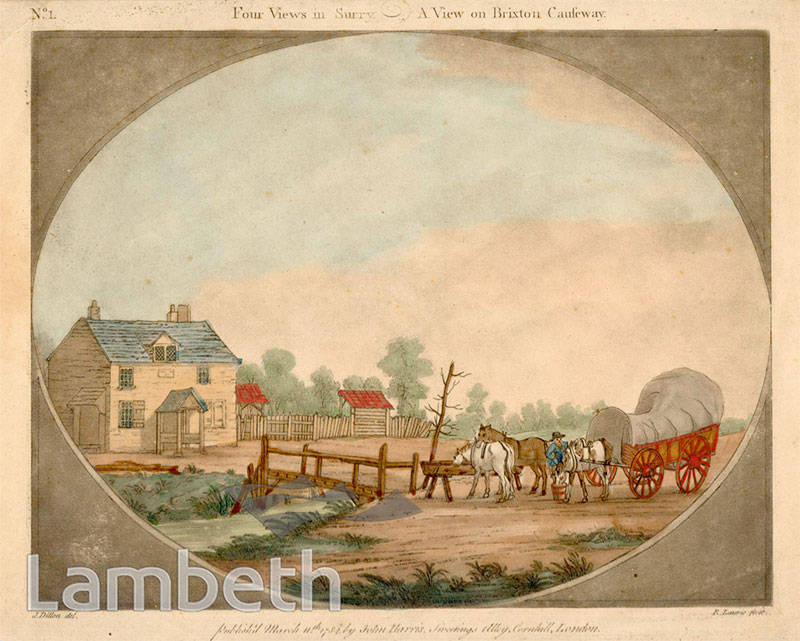
1784 River Effra by Brixton Causeway.
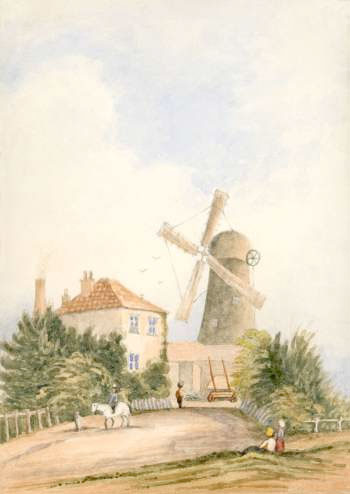
1810 Rush Common enclosed. This was common land stretching from centre of Brixton up to Brixton Hill.
Regency Brixton
1816 Vauxhall Bridge opened. This led to ribbon development of housing to Brixton.
.
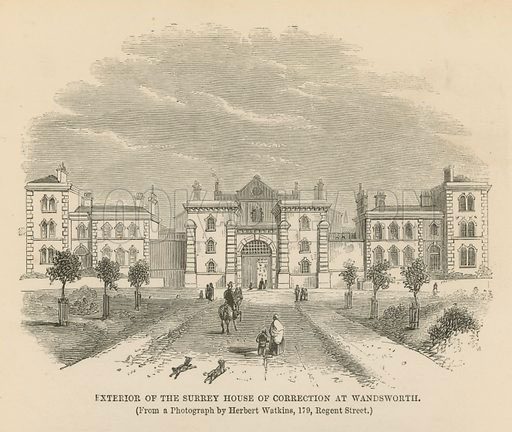
1820 Surrey House of Correction opened on Brixton Hill. Later renamed Brixton Prison
1824 Trinity Homes almshouses built on Acre Lane.
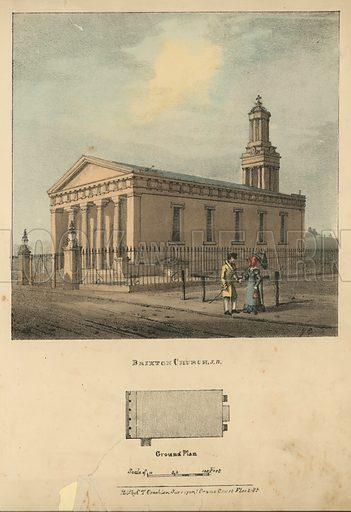
St Matthews Church built on Rush Common. Designed by Charles Ferdinand Porden (1790-1863)
1825 Budd family monument built in Portland Stone on the verge of St. Matthews Cemetery (Grade II Listed).
1828 Congregational Church, St Matthews Road, built.
Early Victorian Brixton
1850s Angell Town laid out on east side of Brixton Road around Wiltshire Road on property belonging to the Angell family.
1852 Brixton Prison converted to a woman’s correctional facility and increased in size.
1853 St John’s Church opened in Angell Town. Designed by Benjamin Ferrey (1810-1880) in the Gothic Style.
Mid Victorian Brixton
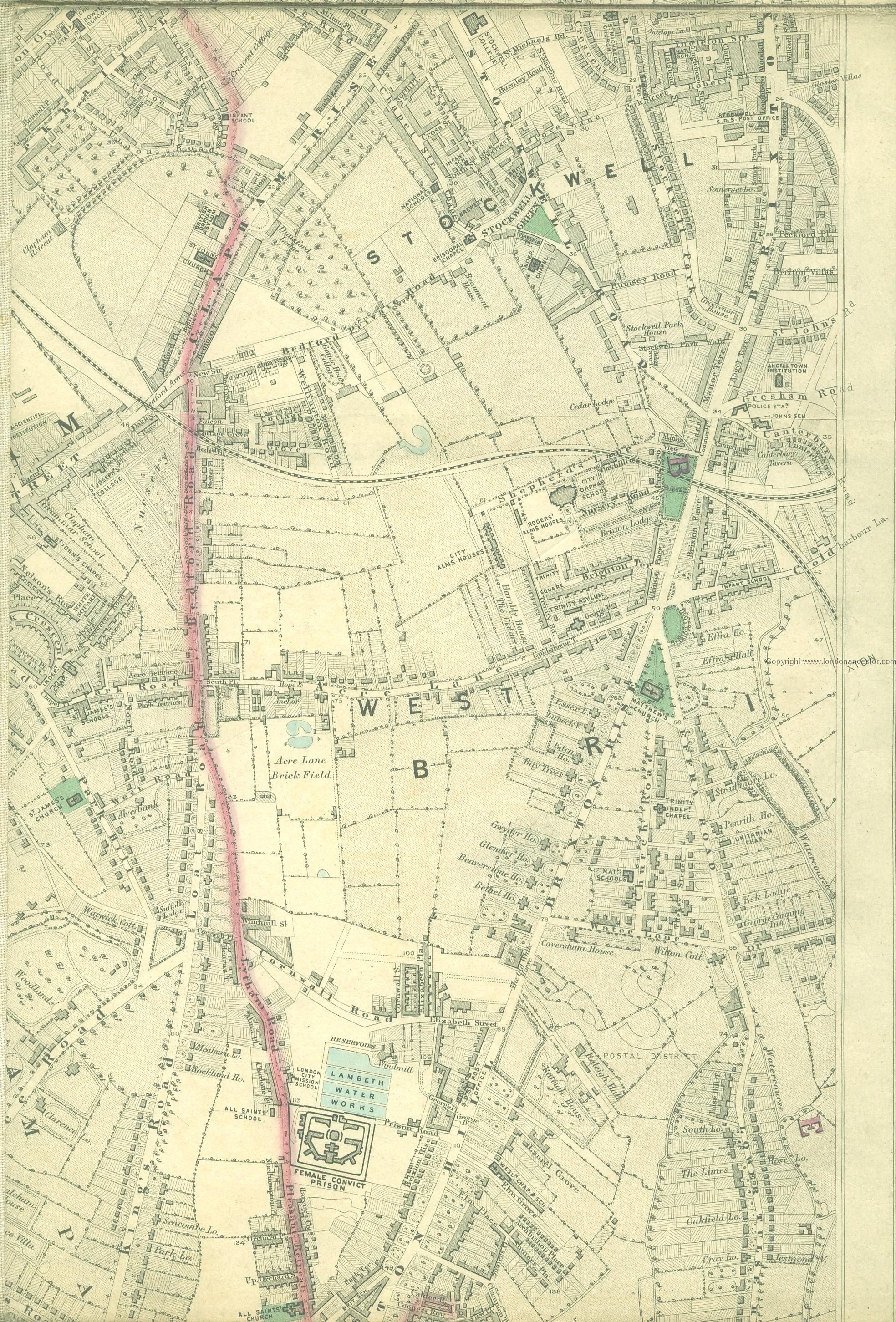
1860s Stanford’s Map showing Lambeth.
1862 London Chatham & Dover Railway viaducts completed.
Brixton station opened.
1866 Loughborough Park station opened (renamed East Brixton in 1894).
1868 St Jude Church built on Dulwich Road. Designed by Edward Cookworthy Robins (1830-1918).
1870s Loughborough Junction developed.
1870 First London branch of David Greig at 54-58 Atlantic Road.
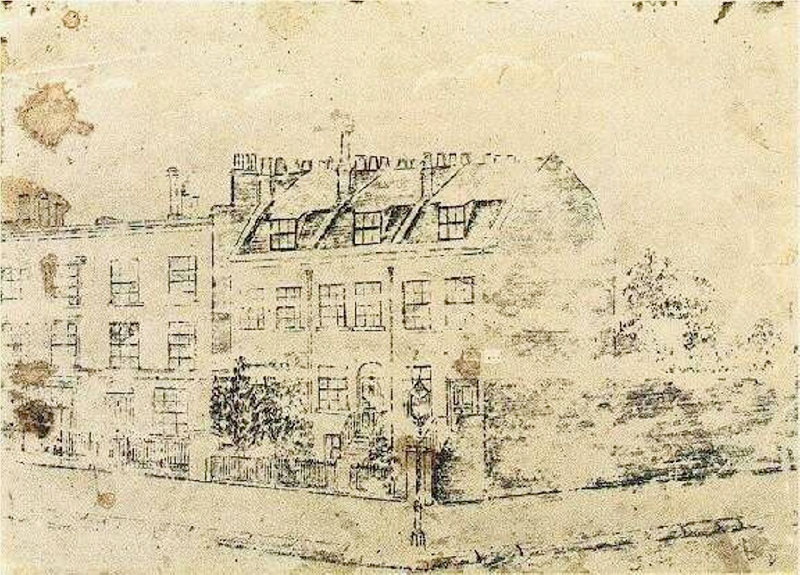
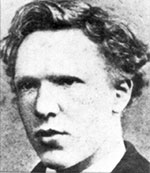
1873 Vincent Van Gogh lived at 87 Hackford Road. Whilst there he drew the house.
1874 St John the Divine built on Vassall Road. Designed by GE Street (1824 -1881) in the Decorated Gothic style.
1877 Bon Marche opened at 442 Brixton Road. Designed by Parsons & Rawlings (more info).
Late Victorian Brixton
1880s Trams led to development of Brixton Hill.
1880 Drapers shop Morley & Lanceley opened on Brixton Road.
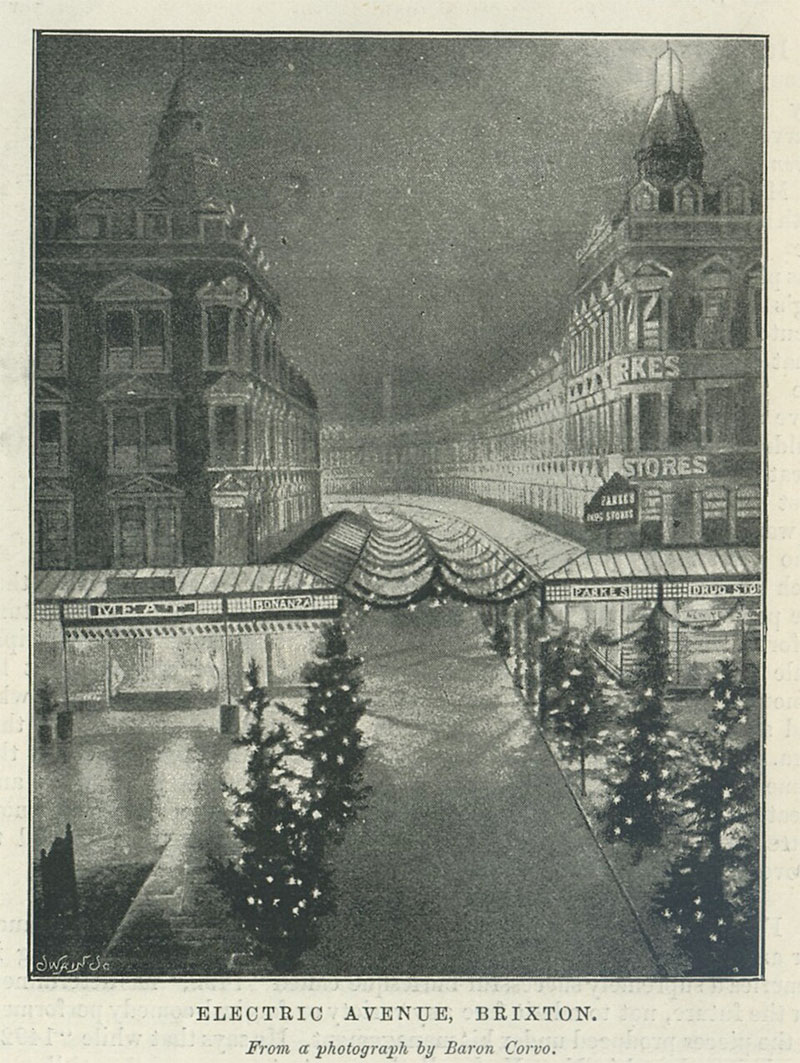
1888 Electric Avenue built. First road to be lit by electricity (1895 photo).
1890 Interior of St John the Divine, Vassall Road, decorated by George Frederick Bodley (1827-1907).
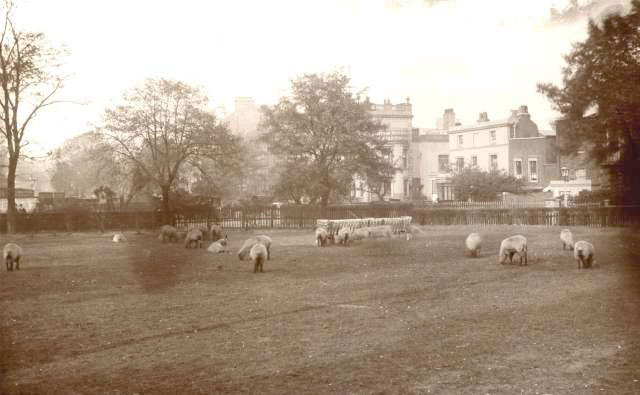
1892 Sheep grazing on Rush Common.
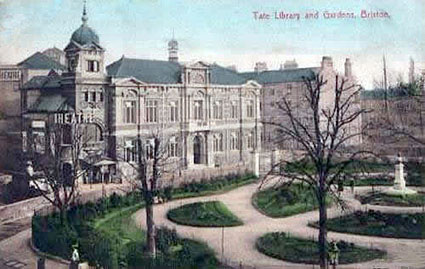
1893 Tate Central Library opened. Funded by sugar magnate Sir Henry Tate (1819-1899). Designed by Sidney R.J. Smith (1858–1913) & built on what was Rush Common.
1896 Brixton Theatre opened next to Brixton Library. Designed by Frank Matcham (1854-1920).
1898 Empress Theatre opened on Brighton Terrace.
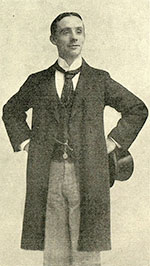
Music Hall star Dan Leno (1860-1904) moved to 56 Ackerman Road.
Many music hall artists resided in Brixton due to the number of local venues.
Edwardian Brixton
1900 Lambeth Council established.
1902 Christ Church, Brixton Road opened.
1905 View of Atlantic Road with horse-drawn bus.
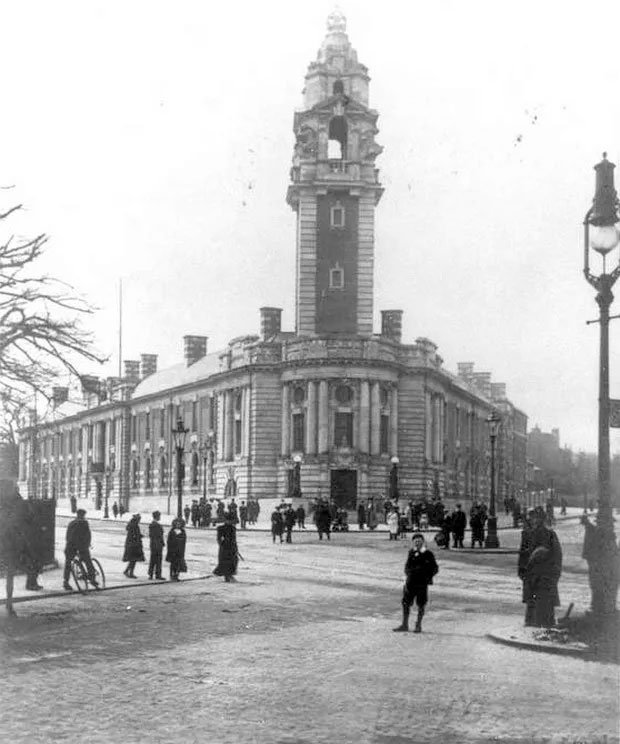
1908 Town Hall, by Septimus Warwick (1881-1953) & Herbert Austen Hall (1882-1968).
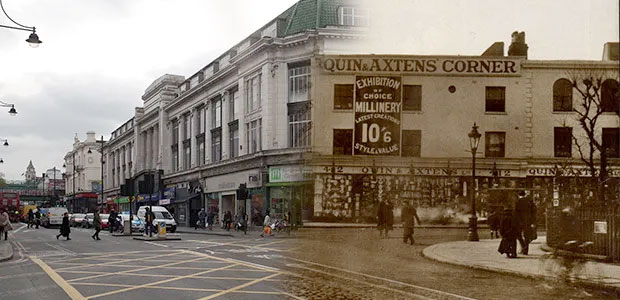
Quin & Axtens store opened (422-440 Brixton Road) later part of Bon Marche.
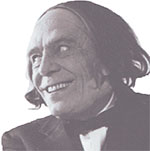
Entertainer Max Wall (1908-1990), born at 37 Glenshaw Mansions, Brixton Road.
1908 Bartholomew's map (showing Brixton & Stockwell)
1911 Brixton Cinematograph Theatre opened at 101-3 Brixton Hill.
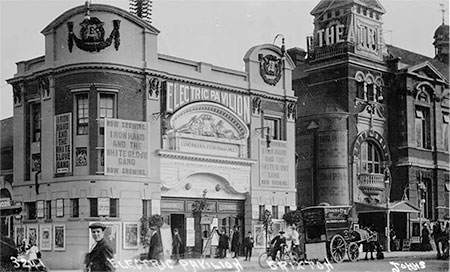
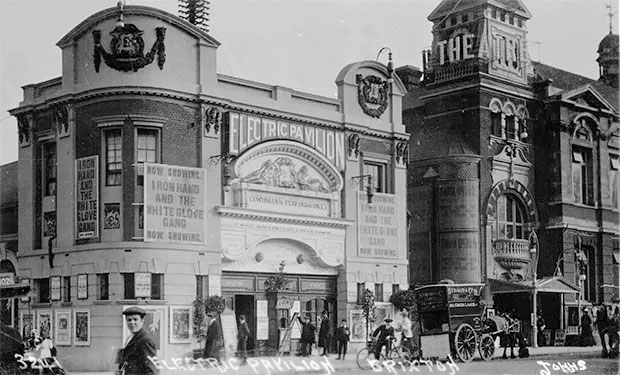
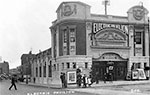
Electric Pavilion opened on Brixton Oval. Designed by E.C. Homer and Lucas.
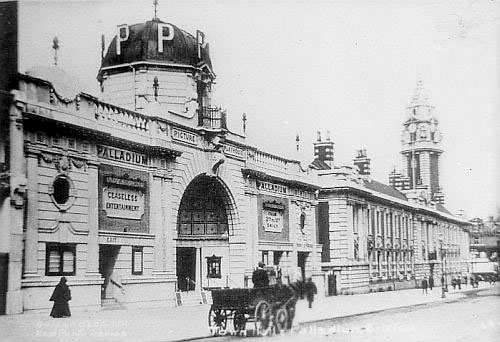
1913 Palladium Picture Playhouse, by Gilbert W. Booth, opened on Brixton Hill.
I
WW1 Brixton
1916 Brixton bombed during a Zeppelin raid.
Interwar Brixton
1920 Great Fire of Brixton. Morley & Lanceley store damaged.
Quin & Axten store acquired by Bon Marche.
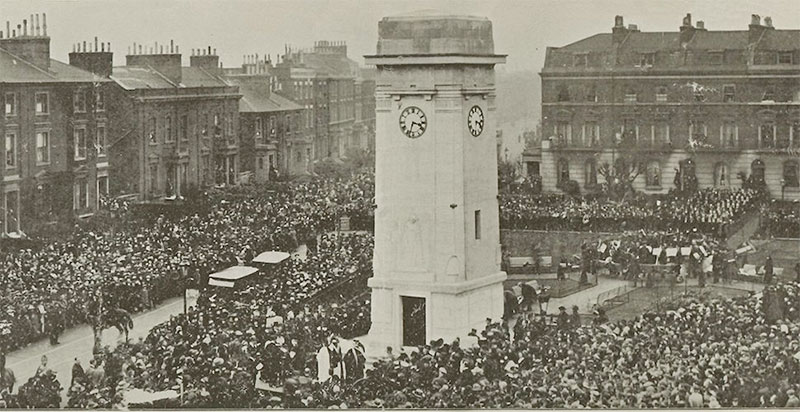
1922 Stockwell War Memorial ceremony. Architect: Frank Twydals Dear more info
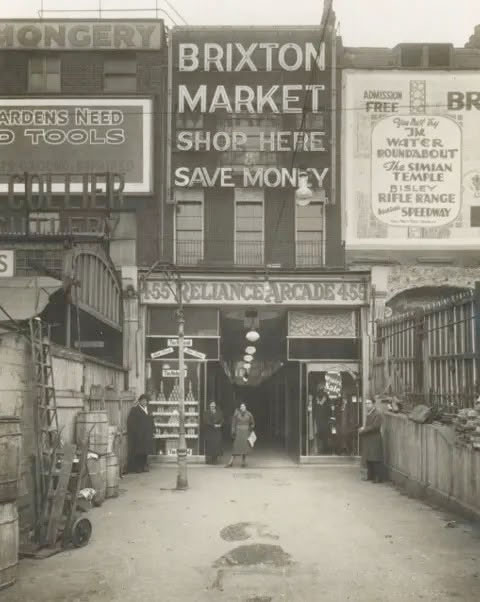
c1924 Reliance Arcade, 45 Brixton Road built for street traders.
1927 Morley & Lanceley reopened as Morleys of Brixton at 472-488 Brixton Road.
1928 Market Row added as second Brixton Market arcade.
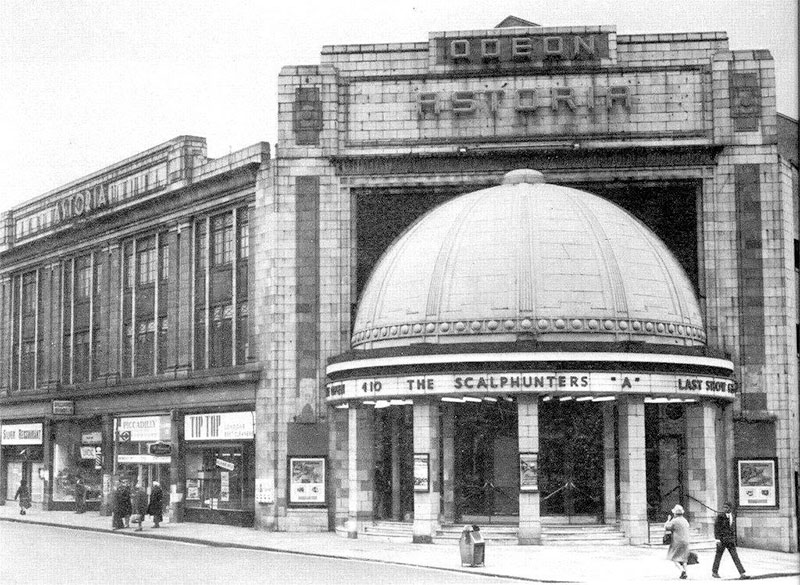
1929 Brixton Astoria opened at 211 Stockwell Road. Designed by Thomas R. Somerford (1881-1948) and Edward A. Stone (1880-19??) as a super cinema with for the A. Segal chain, with interior decoration in the ‘Atmospheric’ style by Marc Henri & G. Laverdet
1937 Third indoor market Granville Arcade (now Brixton Village) opened with 100 small shops in mini-streets called Avenues. Developed by Philip Granville-Grossman (c. 1894-1983) on the site of the Lambeth Carlton Club. Designed by Alfred Barr (1885-1952) and Vincent Burr.
1938 Additional floor added to Town Hall.
Brixton in Second World War
1940 Nov: Brixton Theatre bombed (later demolished).
1941 St John the Divine in Vassall Road bombed (restored by H.S. Goodhart-Rendel in 1955-1958).
Aug: Blitz ended.
1944 18 June: VI bomb hit Brixton - one of first.
28 June: V1 flying bomb killed 25 people in Acre Lane.
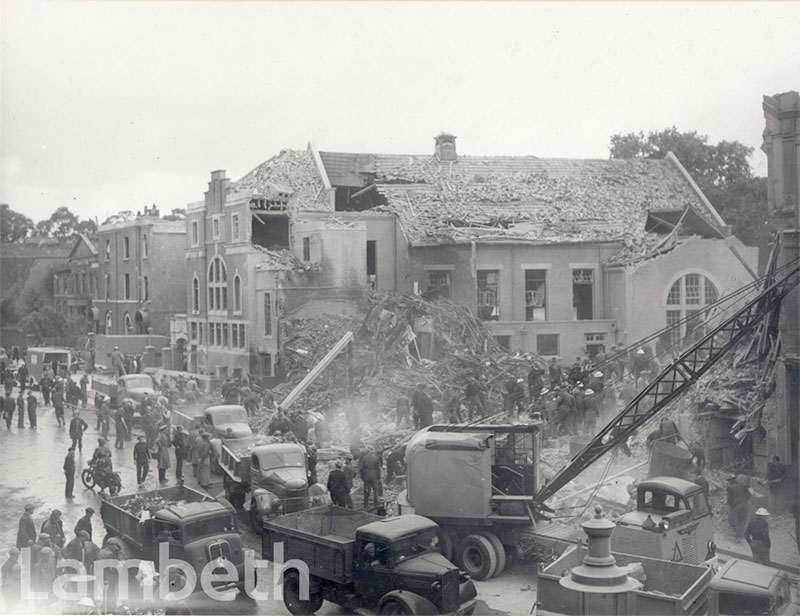
In all 21 V1s landed in Brixton creating extensive damage.
Postwar Brixton
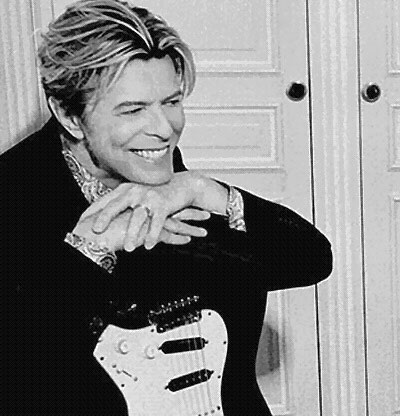
1947 The singer David Bowie (1947-2016) born in Stansfield Road.
1948 First immigrants arrived from West Indies. Settled in Somerleyton Road, Akerman Road and around Railton Road.
c. 1951 Photo of tram by the Town Hall.
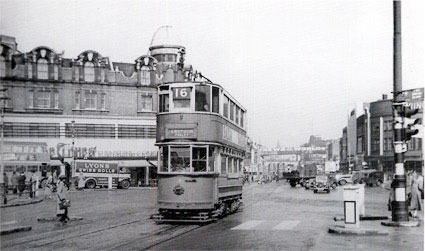
1954 Brixton Pavilion Cinema, Brixton Oval. renamed Pullman.
1956 Palladium, Brixton Hill, rebuilt as the Regal.
1957 Empress, Brixton Terrace, re-opened as Granada Cinema
1960 Laurel Aitken (1927-2005) moved to Brixton. Recorded for the Blue Beat label.
1961 Colour film of Glanville Market (Pathe 1:41) now Brixton Market.
1963 Regal, Brixton Hill, became ABC Brixton.
Linton Kwesi Johnson (b. 1952) moved to Brixton from Jamaica.
1964 Pullman Cinema, Brixton Oval. became Classic.
1971 Brixton Underground Station opened.
1972 Brixton Astoria closed as a cinema. Became Sundown rock venue.
1973 Brixton Sundown closed.
1975 Bon Marche closed (more info).
1976 Classic cinema, Brixton Oval, closed.
East Brixton railway station closed.
1977 ABC, Brixton Hill, became Ace.
1978 Classic cinema, Brixton Oval. re-opened as Little Bit Ritzy.
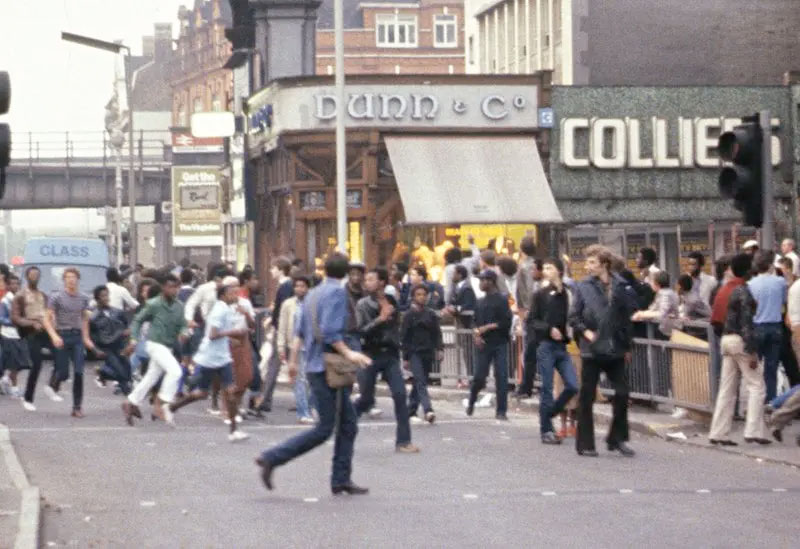
1981 Brixton Riots. Lasted three days in April with much damage.
Ace, Brixton Hill, closed.
Brixton Astoria re-opened as The Fair Deal
1983 Brixton Astoria renamed Brixton Academy - became top London music venue.
1985 Sept: Brixton riot.
Dec: Ace Cinema re-opened as the Fridge nightclub by Andrew Czezowski (ex-Roxy club) & Susan Carrington.
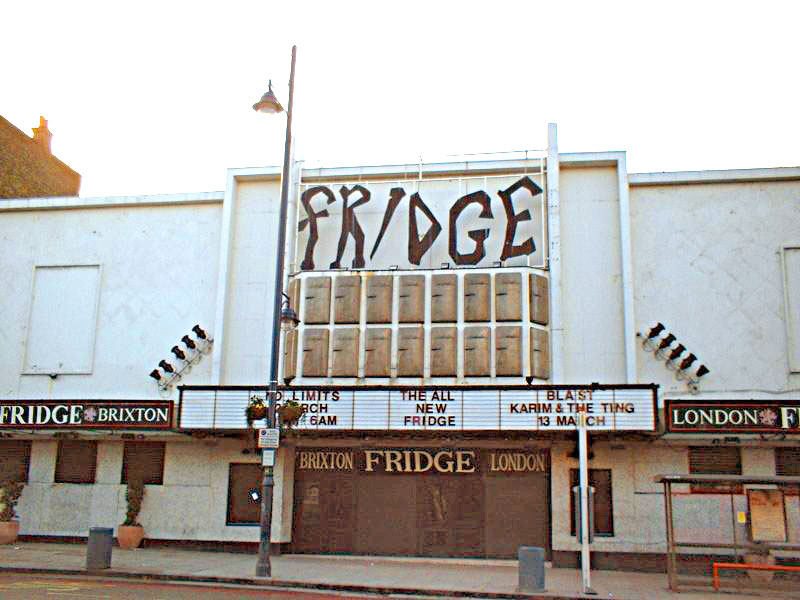
1992 Old Empress Theatre, Brixton Terrace, demolished.
1994 Little Bit Ritzy, Brixton Oval, refurbished & extended (using site of old Brixton Theatre) as Ritzy Picturehouse.
Basement Jaxx formed in Brixton.
1995 Dogstar opened as a bar & club (previously The Atlantic).
Alabama 3 formed in Brixton.
1999 April: 39 people injured on Electric Avenue in bomb attack by neo-Nazi.
C21 Brixton
2009 New shops bars and restaurants added to Market Row and Granville Arcade (renamed Brixton Village).
2010 Windrush Square opened.
2012 George IV pub at 144 Brixton Hill closed down.
Book list:
A History of Brixton - Alan Piper (Brixton Society 1996)
Clapham history
Streatham History
Van Gogh
Dan Leno
Max Wall
David Bowie
Lost Theatres and Cinemas of Brixton